Propolis
Gameplay Overview
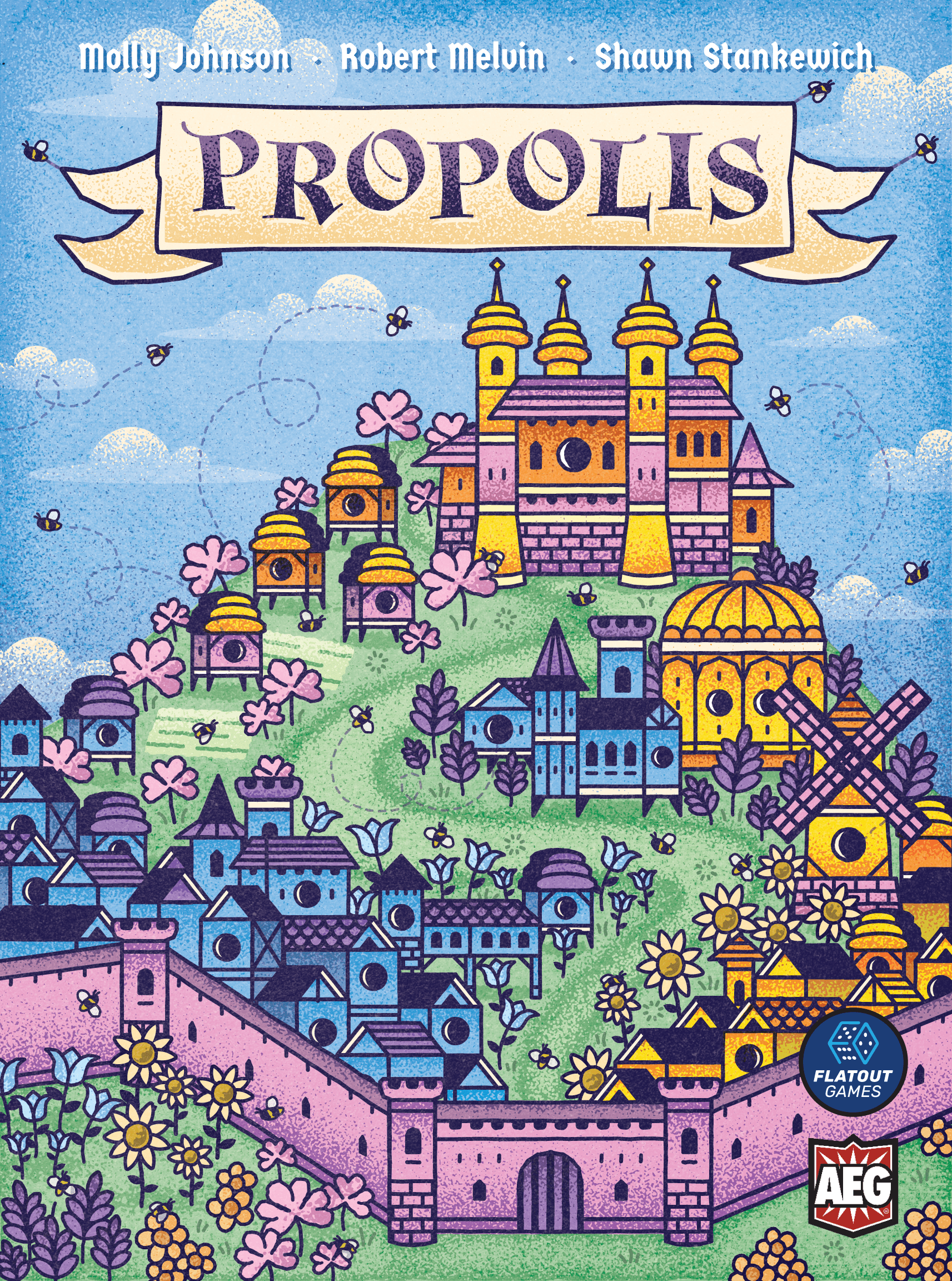
Propolis hands you a hive to build and a very cute reason to fight over flowerbeds. You're deploying worker bees, called beeples, onto landscape cards laid out in rows, and wherever you place them you collect resources like pollen and propolis. You can also fortify bees you've already placed, tipping them onto their side to draw from that space a second time, which quietly doubles their weight if that row ever comes down to who has the most bees on it. Those resources get spent building structures, which score points and often unlock new things your hive can do. The real engine of the game, though, is the card deck itself. Every structure card has a landscape printed on the back, so the same stack of cards that forms the building market you're drafting from is also the deck that refills the landscape rows you're placing bees on. That means you genuinely don't know what's coming next. Someone drafting a structure for their own tableau might flip a landscape you were counting on, or vice versa, so you're always holding your plans a little loosely. The game ends the moment anyone reaches ten structure cards in their tableau, and then everything gets tallied up: fixed point values, formulas keyed to what you've collected, bonuses for certain building types. It moves fast and it looks even faster, since a full table midgame is just a wash of pastel cards and little wooden bees everywhere.
Published
2025
Status
owned
Players
1 - 4 Players
Our thoughts
This was one of the first games Madeline picked up for our collection purely on a whim. The cover was just too cute to pass up, and she is extremely easy to win over with adorable design or a sleek art style. This game has both, and bees turn out to be right up there with woodland creatures and mushrooms as one of the few themes that are basically irresistible on sight.
It plays like Splendor with more going on underneath. Splendor is a great entry point for teaching the core idea of engine building and resource management, but Propolis adds real complexity and player interaction to how you're actually collecting things. Our favorite detail by far is the double-sided landscape and structure cards forming one shared deck. It means you genuinely can't predict which landscapes are going to show up next, since someone drafting a structure could easily flip over a landscape you were counting on and quietly wreck your plans. Small as that is, it forces a level of forethought that keeps your mind properly engaged the whole game.
Other things we love: the art style and overall visual impact, and how the core mechanics stay simple while still giving you enough options each turn that you never feel like you're just running the same loop over and over, the way Splendor can start to feel. The compact box and the dual-use cards are genuinely clever design. On the downside, it takes up a surprising amount of table space for something this mechanically light, and the cards slide around more than we'd like.
The honest caveat is that this game is a bit redundant if you already know Splendor or other basic engine builders. If you like the feeling of learning a "new" game that doesn't actually ask much new of your brain, just gives you a refreshed skin on something familiar, you'll enjoy this a lot. There's enough different here to feel novel, but at the end of the day it's still fairly close to plenty of other games out there. If Madeline hadn't already learned and owned Splendor, this is the one she'd reach for first, since Splendor's theme is a little garish (you're just playing capitalist) and Propolis is simply more pleasant to look at. But when we played this after already knowing Splendor, it still felt delightful, like we were expanding our own skills and getting better at games in general. People generally enjoy it when we teach it, but the reaction is almost always "oh, it's like Splendor" or "it's like that other one," anchoring it firmly to something that already exists. So honestly, how much this one lands for you probably comes down to which game you happen to discover first.
Try this if you like...
Cute theming that earns its cuteness
Bees sit right alongside woodland creatures and mushrooms as one of the few themes that are just irresistible on sight, and the art here fully delivers on that.
Engine building with a bit more bite than Splendor
The resource collection has real texture to it, mostly thanks to the shared deck twist, so it doesn't feel like you're just running the same three moves every turn.
A game that keeps you guessing about what's coming
Because structure and landscape cards are the same deck flipped over, you're always doing a little forecasting about what your opponents' choices might hand (or steal from) you.
Small-box, high-impact design
It's compact on the shelf and clever in how it reuses its own components, even if that efficiency comes with a tradeoff (see below).
Learning a "new" game that doesn't ask much of your brain to pick up
If you already know something like Splendor, this reads as a comfortable, lightly remixed version rather than something you have to learn from scratch.
Follow the same spark
What to play after Propolis
Not just games that look alike—these are the specific connections we felt at the table.

Splendor
2014 · 2 - 4 Players
Our thoughts coming soonWhy it connects
The clearest comparison, and the one every new player reaches for immediately. Both are lean engine builders about drafting your way toward an efficient resource-to-points machine.
Point Salad
2019 · 2 - 6 Players
Our thoughts coming soonWhy it connects
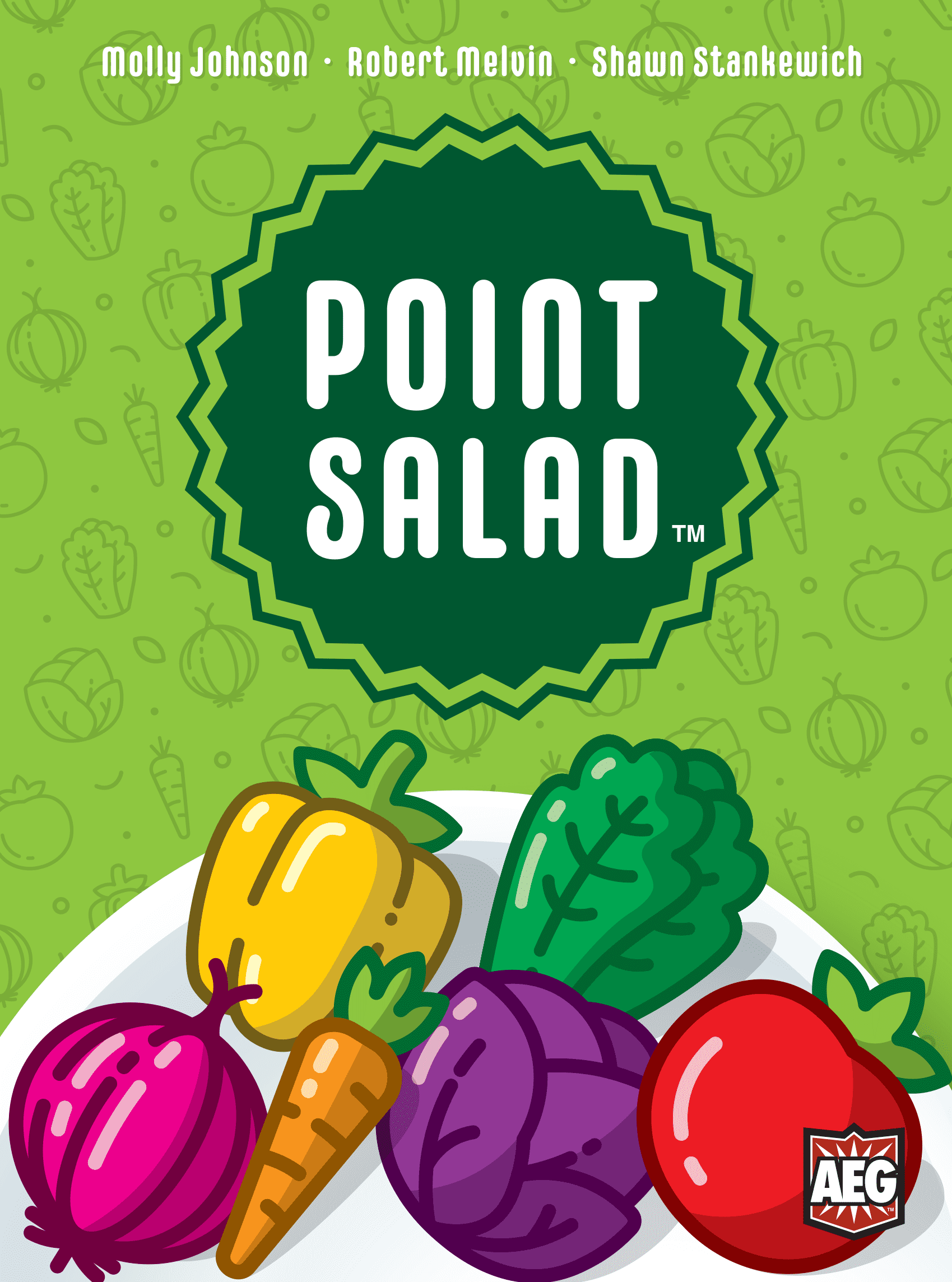
From the same design team, and it shows in the shared instinct for compact, card-driven scoring built around cute, approachable theming.
We've featured Propolis in these collections: