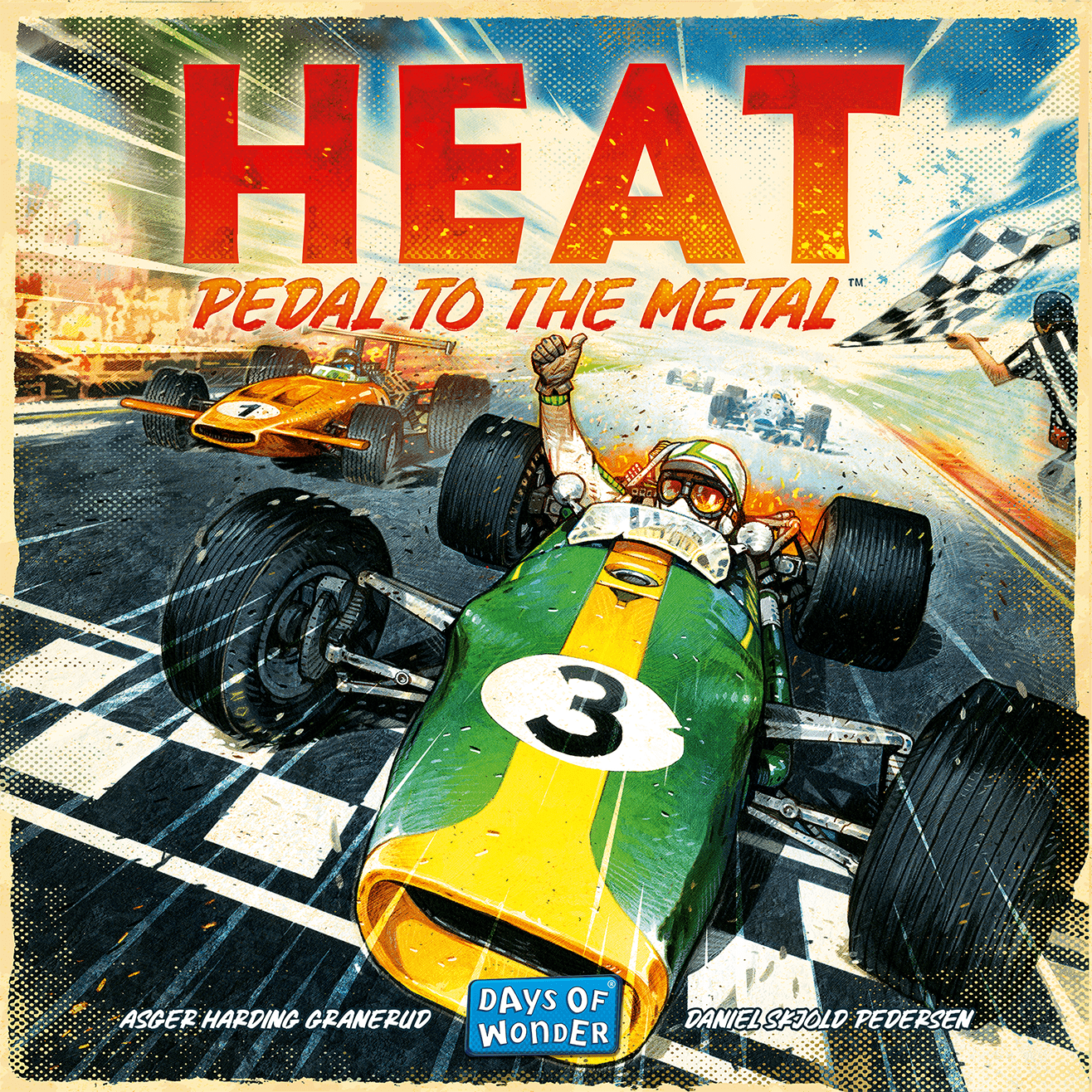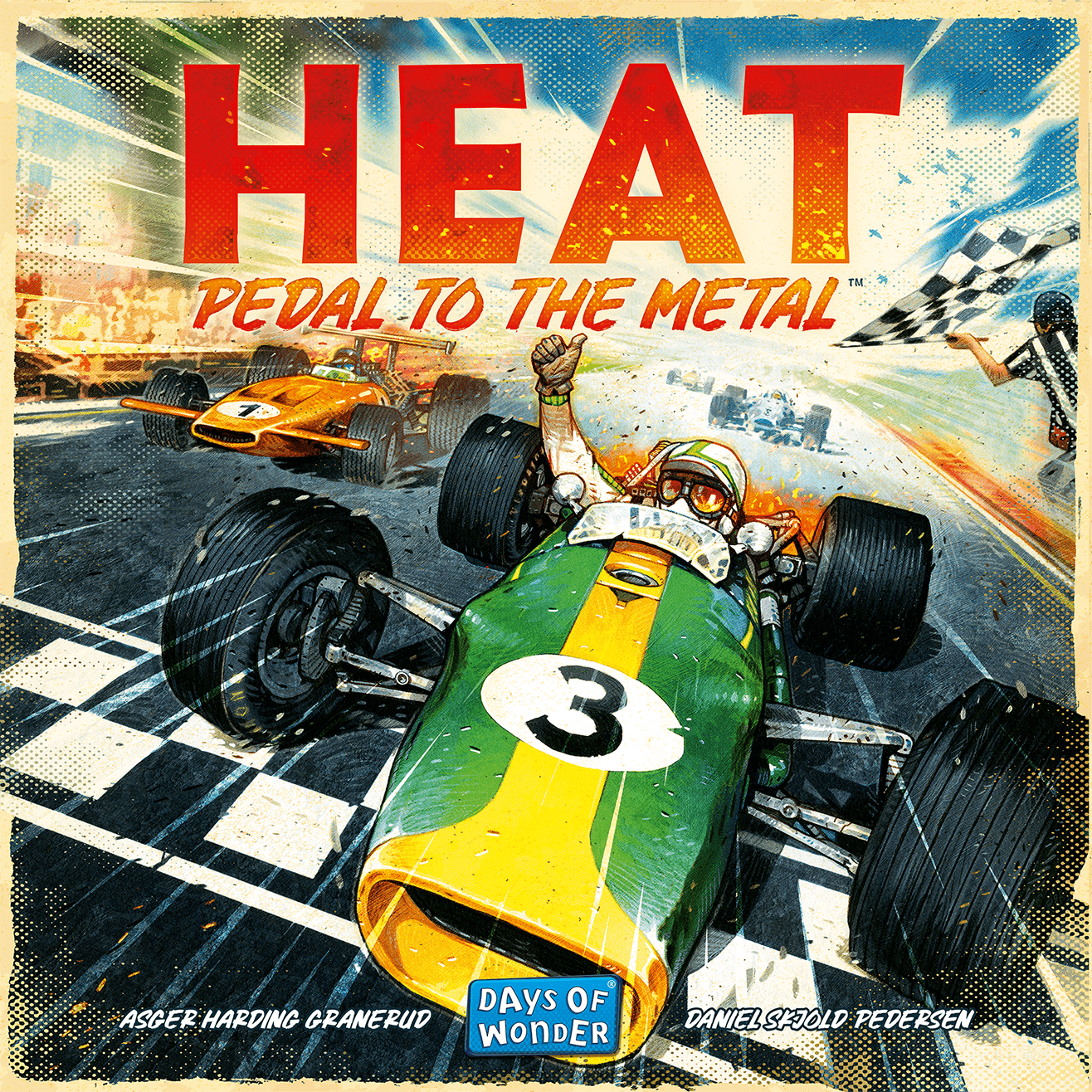
Heat: Pedal to the Metal
Gameplay Overview
Heat puts you behind the wheel with nothing but a hand of cards and a running risk calculation. Each round, you set your gear, which caps how many cards you're allowed to play, and then you commit those cards to move your car forward. The number you land on has to answer to the track. Every corner has a speed limit, and if you cross one going faster than it allows, you pay the overage in heat, a resource that also happens to be the thing you play cards from. Run out of heat and you can't pay, and your car spins out, costing you position and control. That tension runs the whole game: speed cards are seductive because they're fast, but every one you play also clogs your engine with heat that has to be cooled down before you can reuse it, so playing too aggressively for one straightaway can strand you underpowered for the corner right after it. Boosting lets you flip your deck for a burst of speed at the cost of more heat. Slipstreaming rewards you for reading the pack, letting you tuck in behind another car and get pulled along for free. None of it is random once the cards are in your hand. Every choice is visible, every risk is one you signed up for, and the whole race plays out as a string of small, tense decisions about exactly how close to the edge you're willing to run your engine.
Published
2022
Status
owned
Players
1 - 6 Players
Our thoughts
We turned this one down more than once before we actually sat down to play it. A racing game just didn't sound like our speed, pun fully intended, and we assumed it would land like the other push-your-luck games we'd heard people rave about and then found disappointing ourselves. Then we finally played it, and within the week we couldn't stop opening it back up on Board Game Arena. It is such a joy. Yes, it's push-your-luck, but the amount of actual control sitting in the driver's hands caught us completely off guard.
What won us over: the push-your-luck never feels like it's just handing you risk and walking away, it's built around how the risk actually feels to take. The slipstreaming rewards you for predicting the players around you instead of ignoring them. The resource management is razor thin (heat, speed, that's basically the whole toolkit) and somehow that's plenty. And there's something genuinely lovely about a table full of laughter, cheering on someone else's lucky draw as much as your own.
The obvious limitation is that it's a racing game, so there's a ceiling on how complex it's ever going to get, and it won't be the pick when you want something more intellectually demanding. But it earns its reputation as a modern classic precisely because it doesn't try to be anything other than what it is. You're still leaning forward and planning every turn, watching your own programming play out, a lot like Colt Express in that particular way. It just does it at full speed.
Try this if you like...
Push-your-luck that actually respects your decisions
The risk here comes from your own hand and your own nerve, not a die roll you have no say in.
Reading your opponents as much as the track
Slipstreaming means watching where everyone else is heading and timing your own move to ride their draft.
Tight resource management with almost nothing to manage
Heat and speed are the entire economy, and somehow that's enough to make every turn a real decision.
A game that knows exactly what it is
It doesn't reach for more complexity than a racing game needs, and it's better for staying in its lane.
A table that laughs at its own near-misses
Watching someone spin out a corner they were sure they'd clear is most of the fun.
Follow the same spark
What to play after Heat: Pedal to the Metal
Not just games that look alike—these are the specific connections we felt at the table.
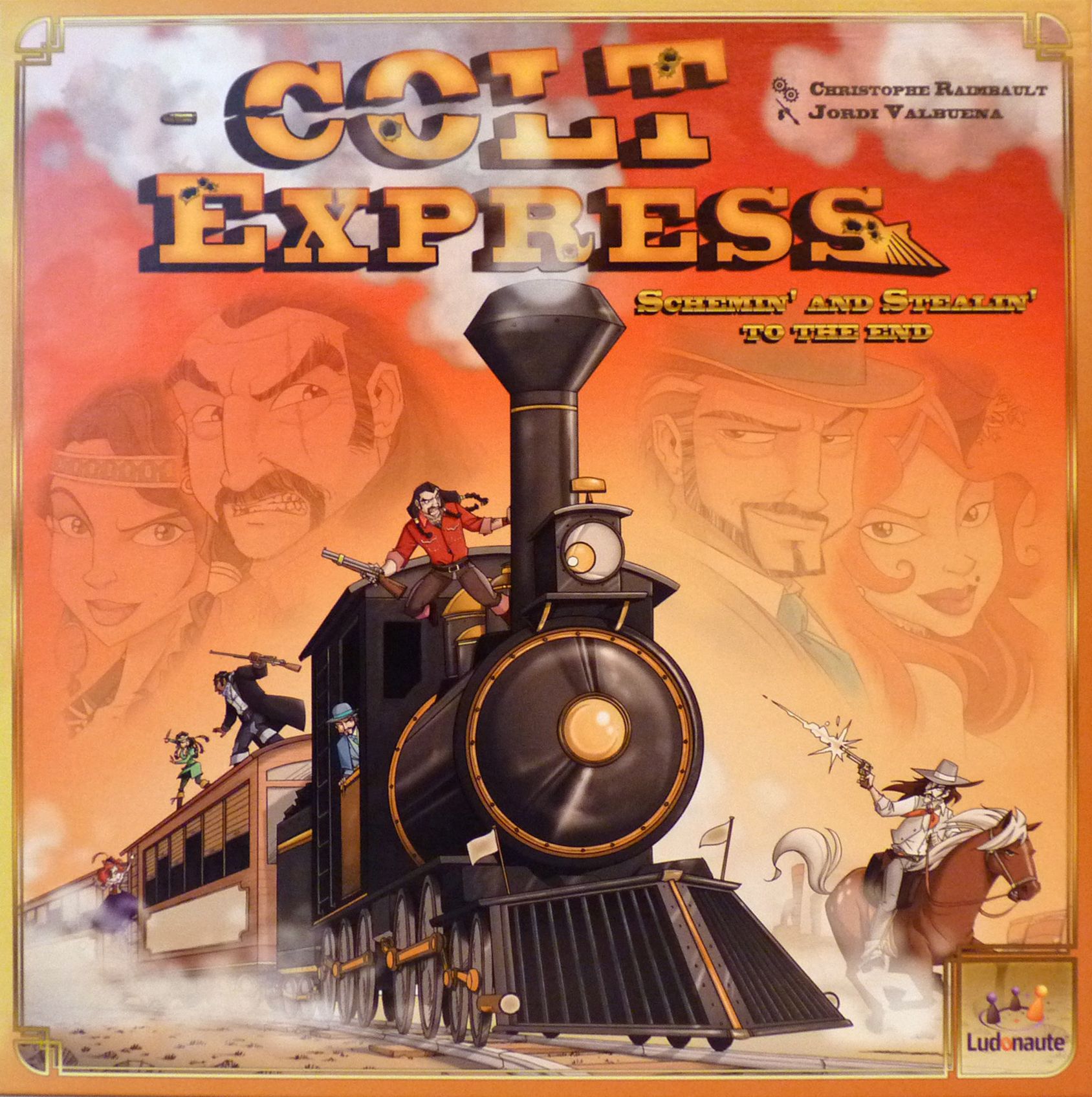
Colt Express
2014 · 2 - 6 Players
Our thoughtsWhy it connects
Both games have you programming a sequence of moves and then watching it unfold, half-planning and half-hoping the board cooperates with what you locked in.
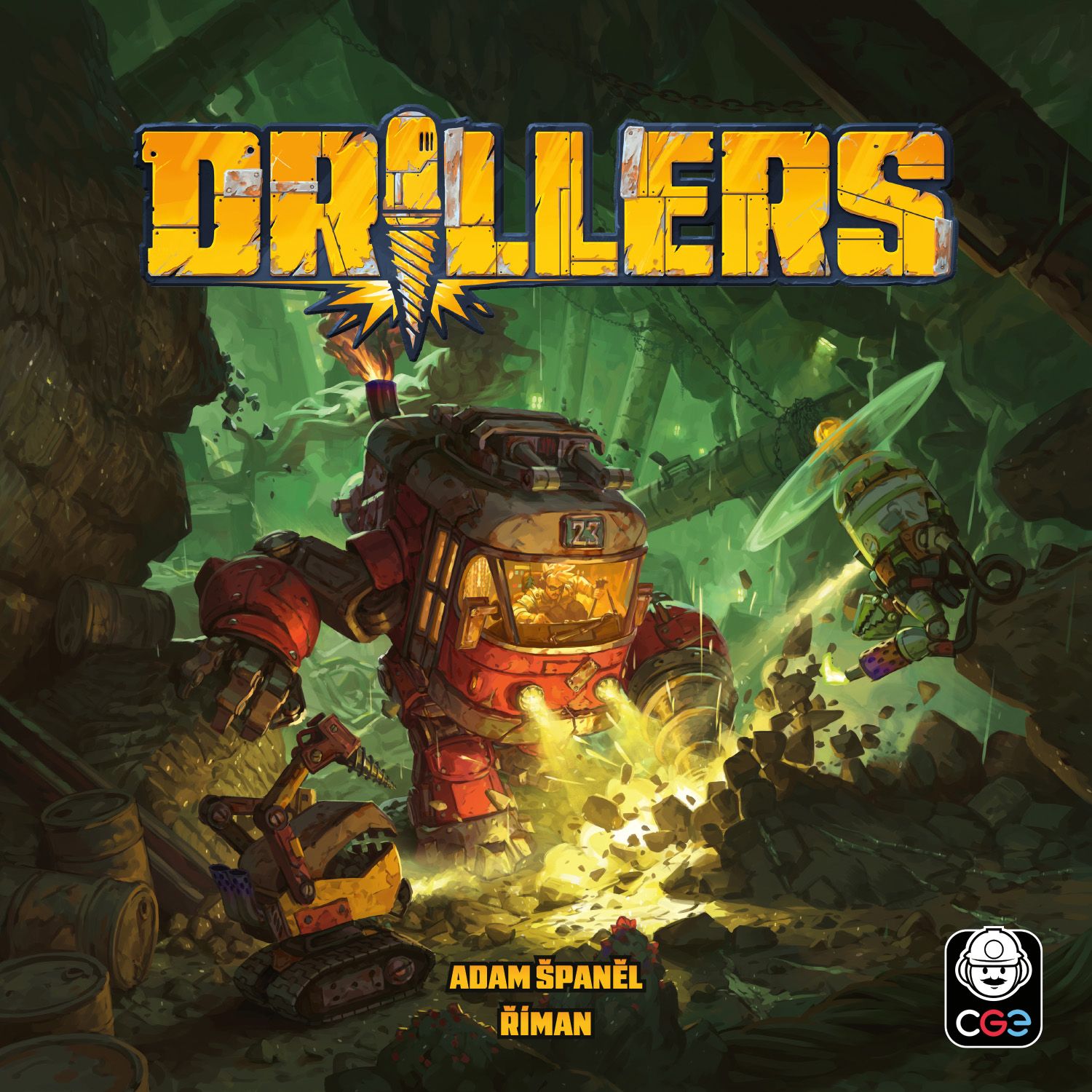
Drillers
2026 · 1 - 4 Players
Our thoughts coming soonWhy it connects
For the tight resource management of fuel and the push-harder-at-your-own-risk mechanic.
We've featured Heat: Pedal to the Metal in these collections: